

Open Banking changed how financial institutions access customer-permissioned banking data. Open Finance is widening that perimeter, extending data sharing across a broader set of financial products, providers and relationships.
But a wider data perimeter does not necessarily create a more connected financial institution. Turning that data into value depends on the processes, organisational capabilities and governance around it, while differences in standards and interoperability can still determine how easily information moves across systems.
The value of Open Finance therefore depends not only on what data becomes available, but on how effectively institutions can integrate that data into their existing systems and processes.
More Data Creates More Financial Context
With customer permission, the financial picture can extend across:
Savings and deposits
Credit and lending
Mortgages
Investments and wealth
Pensions
Insurance
That broader context can change what institutions are able to understand and act on across financial journeys:
Lending: combine permissioned banking, credit and investment data to build a more complete view for affordability and eligibility assessment.
Collections: identify changes in a customer’s financial circumstances that may support earlier intervention or more appropriate repayment arrangements.
Wealth: bring savings, investment and retirement information together to support more contextual advice.
Customer engagement: use broader financial context to make offers and next-best actions more relevant to the customer’s circumstances.
As Open Finance brings more financial products into permissioned data sharing, institutions have the potential to work with a complete financial context rather than isolated products or transactions.
But expanding the field of view solves only one part of the problem. Seeing more of the financial relationship is different from being able to use it.
From Open Finance Data to Financial Decisions
Open Finance can make financial data portable, but portability is only the beginning. For that information to influence an outcome, it has to move through the institution and connect with the systems where customer interactions and financial decisions actually happen.
Permissioned data → Integration → Customer context → Decisioning → Workflow → Action
Each step introduces another dependency. External data may arrive through an API but still use different formats, definitions or standards. It may need to be matched with an existing customer, interpreted alongside internal data and made available to the right decisioning or workflow system.
This is why interoperability and standardised data-sharing protocols remain central to Open Finance implementation. More recent experimentation has shown the problem in practice. Differences in technical standards, data formats and trust frameworks can interrupt the movement of financial information even when the underlying networks are already capable of sharing it.
For financial institutions, the opportunity moves beyond accessing Open Finance data to integrating it into the decisions and actions where its value is realised.
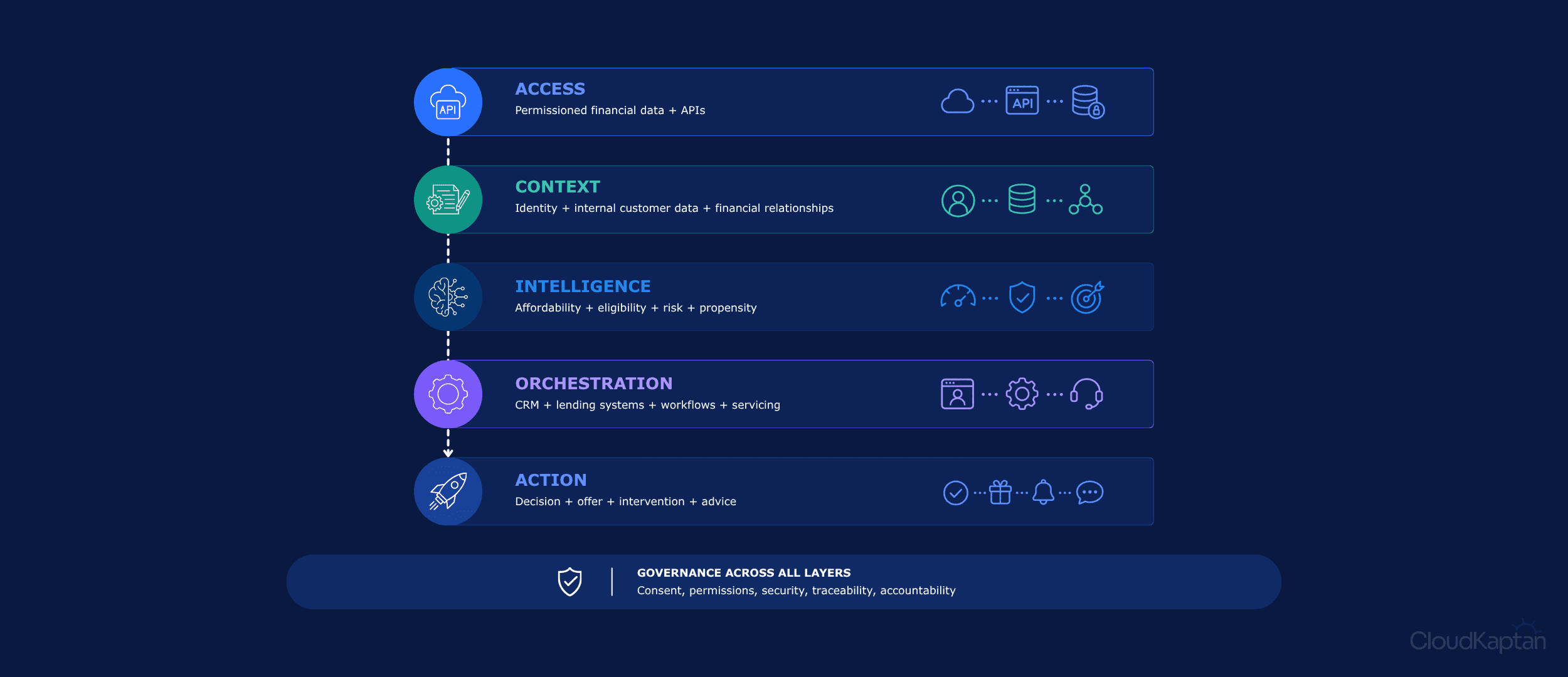
Governance runs across the stack: consent, permissions, security, traceability and accountability.
The distinction between these layers matters. Standardised APIs can make data exchange more efficient, but usable data also depends on interoperable formats and infrastructure. Recent interoperability work has gone further, demonstrating how translation layers can connect different Open Finance networks without requiring their underlying architectures to be replaced.
For financial institutions, this makes Open Finance an integration challenge as much as a data-access opportunity. This makes interoperability an enterprise architecture concern, not only a data-sharing concern.
Connecting Open Finance with Business Architecture
The data-to-action path rarely operates in isolation. Open Finance data enters an existing technology environment, often spanning core platforms, customer systems, lending applications, data platforms and legacy infrastructure.
That makes the connections between systems as important as the availability of the data itself. Common points of friction include:
Fragmented customer data that makes it difficult to establish consistent financial context.
Disconnected workflows that prevent external data from reaching the process where it is needed.
Legacy integration patterns that make new data sources slower and more expensive to connect.
Inconsistent data models that require information to be translated before it can be used across systems.
Governance boundaries that determine where permissioned data can be accessed, processed and acted upon.
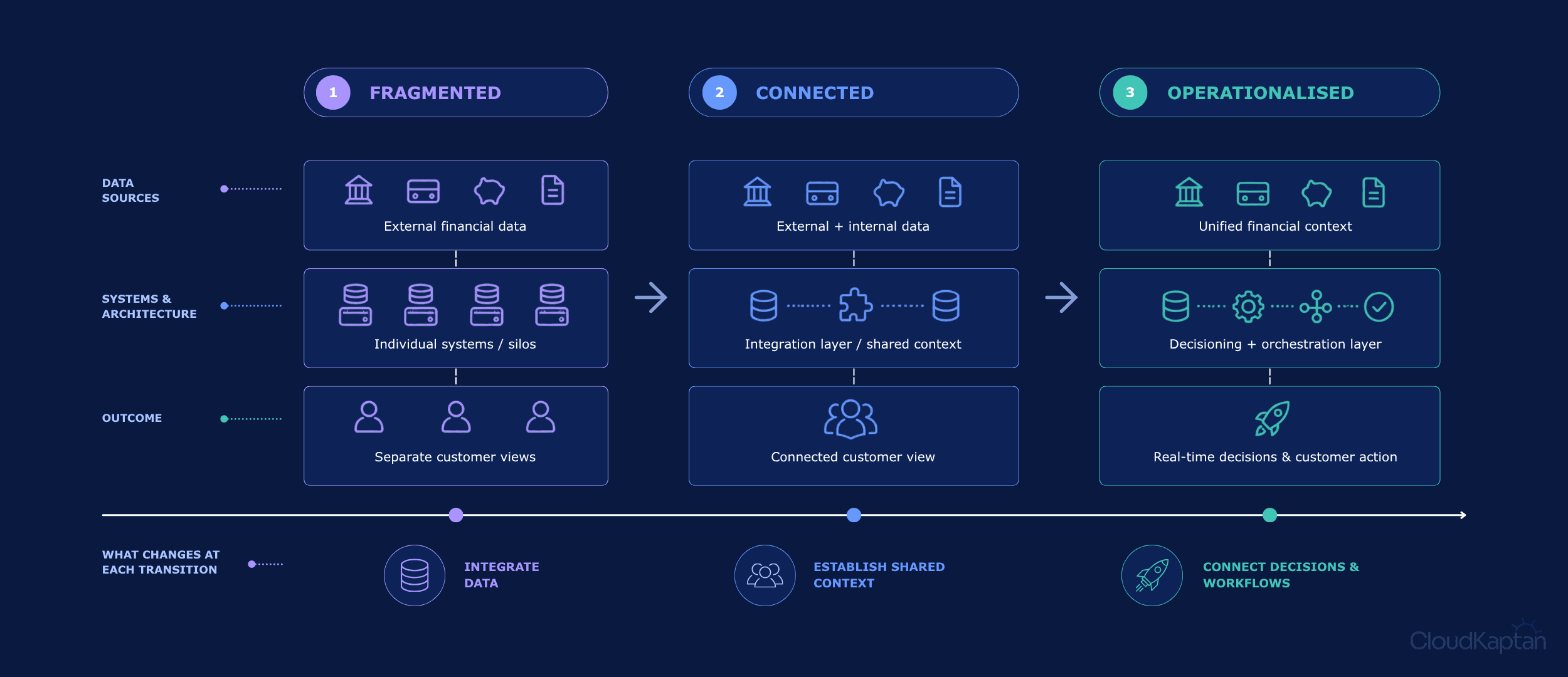
These challenges become more visible as Open Finance ecosystems connect across different technical standards and data formats. Interoperability initiatives are already exploring how those differences can be bridged without requiring institutions to replace their underlying infrastructure.
Open Finance therefore adds another architectural priority: creating a connected operating environment where external financial data can move reliably into the systems responsible for decisions and customer journeys.
Building Open Finance as an Operating Capability
As Open Finance expands, readiness will depend on more than participation in a data-sharing ecosystem. Institutions also need the internal capability to absorb that data, establish context around it and connect it with the processes where financial decisions are made.
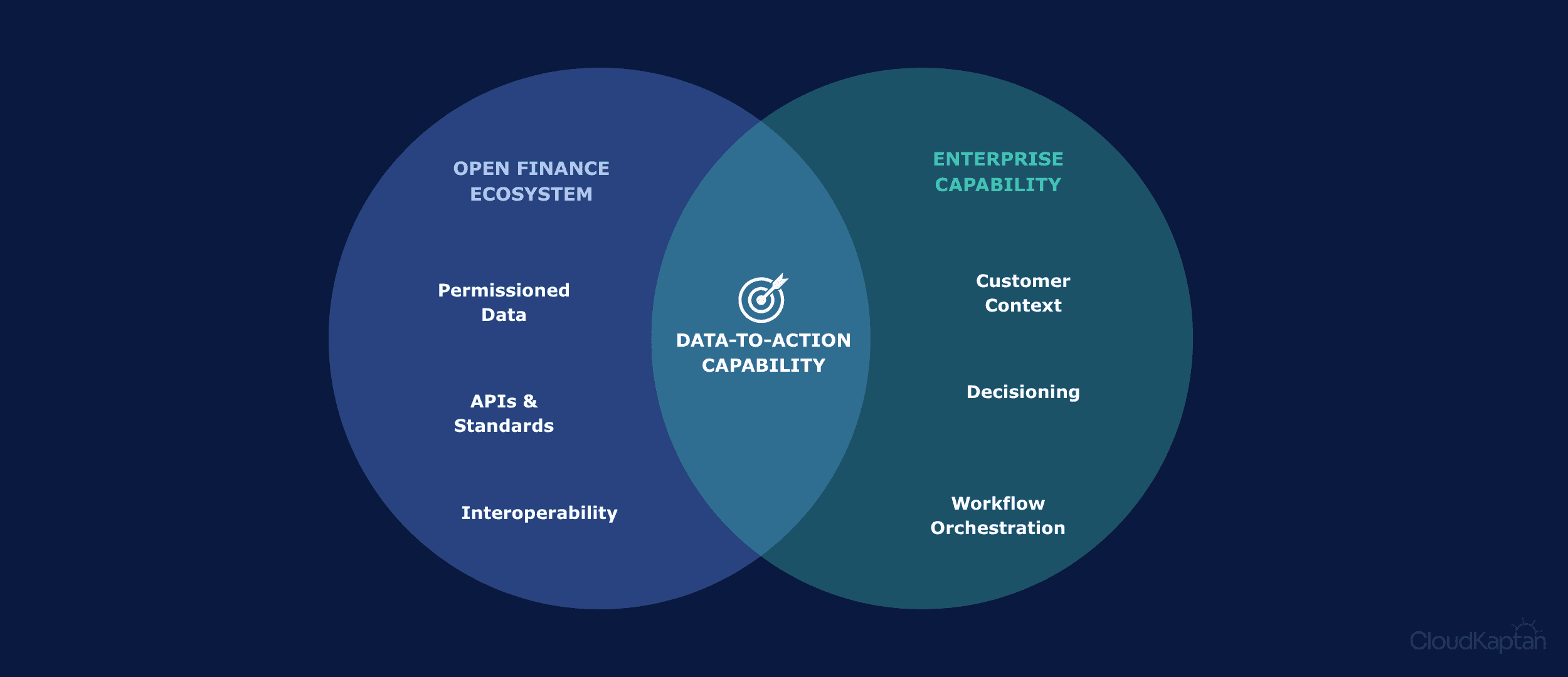
This becomes particularly important as Open Finance and AI begin to converge. Broader permissioned across accounts, credit, investments and other financial relationships can support more informed customer insights, risk assessment and personalised financial services. As AI systems become capable of moving from analysis towards action, connecting this context with workflows and governance becomes increasingly important.
The progression is increasingly clear:
Data access → Financial context → Intelligence → Operational action
Open Finance may widen the financial data available to an institution. Its advantage, however, will be shaped by something deeper: how effectively that institution can shorten the distance between permissioned data and a governed financial action.
